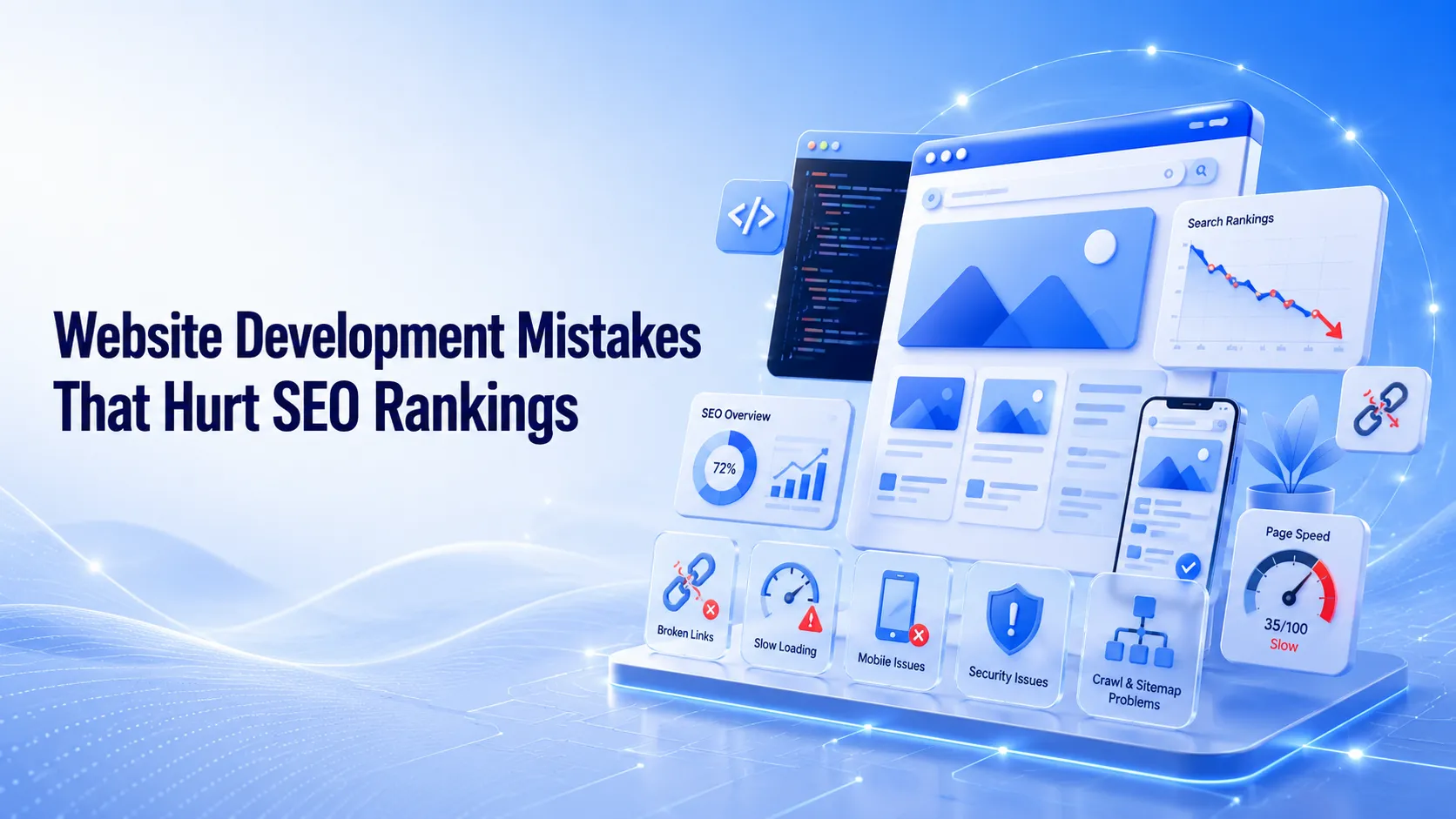
Common Website Development Mistakes That Hurt SEO
Learn common website development mistakes that hurt SEO rankings, including speed issues, poor structure, mobile problems, and technical SEO errors.
7 minutes read
Learn common website development mistakes that hurt SEO rankings, including speed issues, poor structure, mobile problems, and technical SEO errors.
7 minutes read
Author:
Zuhaib Ahmed
Updated:
July 23, 2026
Building a website is not merely making a nice-looking website. Every design choice, line of the code and technical aspect will impact how the search engine likes and ranks your website. While businesses focus on making their website look and work well, there are some mistakes they make in their development process that silently impact their SEO.
Common website development mistakes are issues that prevent search engines from crawling, indexing and ranking the pages. These issues can reduce organic traffic, slow down the website speed and affect the user experience.
The key to successful SEO is a well-developed website. Search engines like Google encourage mobile-friendly, secure, quick and easy-to-navigate websites. No matter how good SEO is, if the website doesn't work properly, then it is of no use.
In this article, you'll learn about the most frequent website development mistakes and how they affect your website's search engine ranking, as well as how to avoid them.
The following are some of the most common website development pitfalls that could adversely affect your SEO and how to avoid them.
To avoid mistakes in development, one of the most important things is to have a clear website structure. Important information should be readily available within a few clicks of the visitor, and your pages should be easily understood by search engines. If the website is not well structured, then crawling becomes difficult and it diminishes the authority between the pages.
Include logical menus, organised categories and simple URLs. All significant pages must be hyperlinked and should not require "clicking through" more than once.
Link different web pages with natural links that make sense. Internal links assist search engines in finding content and help users discover relevant information.
Unclean URLs make sites less user-friendly and less search engine friendly. Keep URLs short, descriptive, and with keywords that convey the meaning of the page.
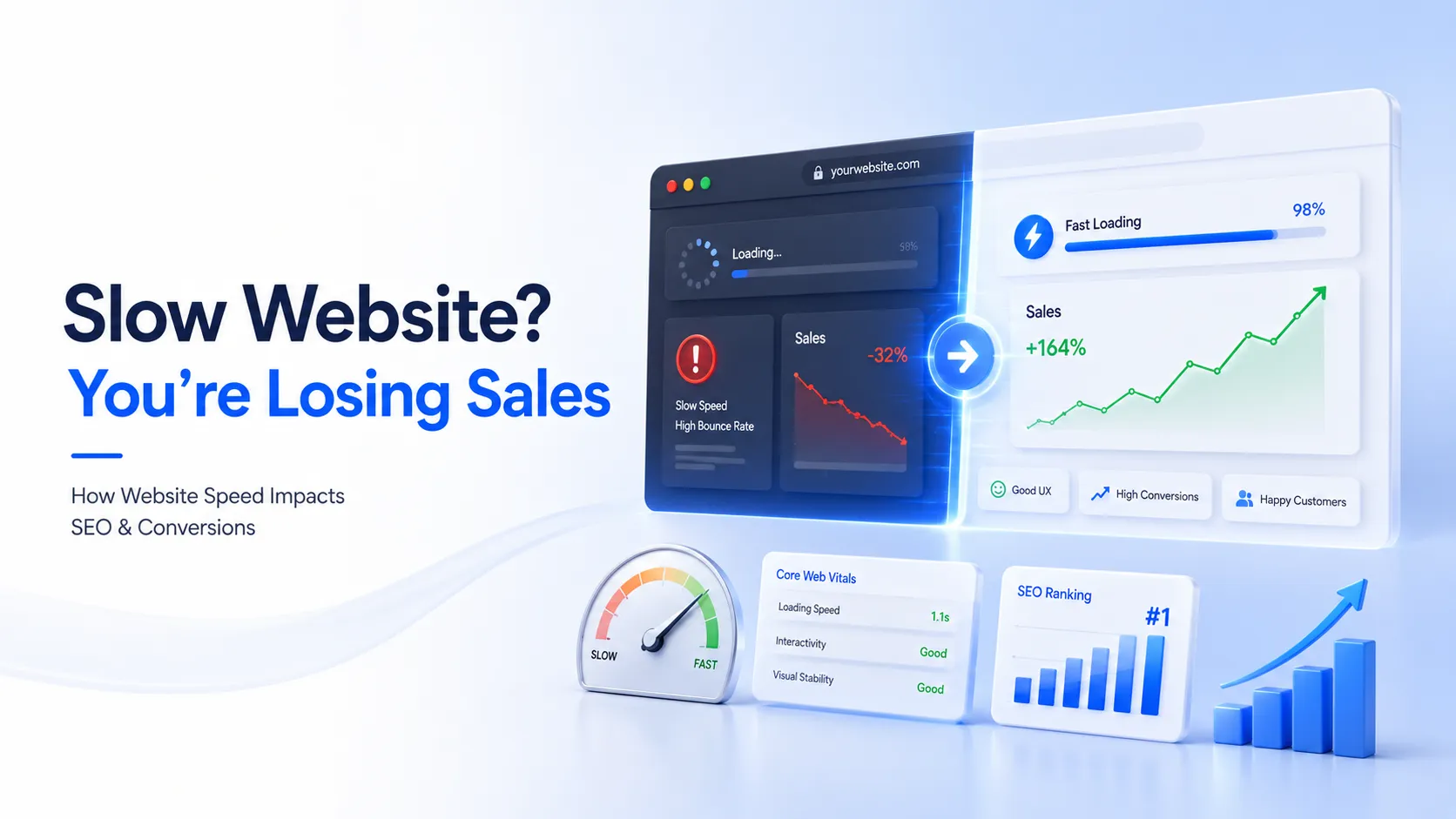
In fact, website speed is a proven ranking factor and a significant user experience element. If a website takes a long time to load, visitors are not likely to return, as they will not have the patience to wait for pages to load.
Common causes include:
Pictures should be compressed before uploading, modern formats such as WebP should be used, images should have descriptive ALT tags, and they should load quickly. Optimising images enhances page speed and supports image SEO.
The vast majority of internet users are surfing on their smartphones and tablets. The lack of a responsive website can mean that you risk losing potential customers and valuable search presence.
Your website should automatically adjust itself to various devices and remain readable and usable.
It should be easy to navigate, have readable typography, clean layouts, an accessible design, readable call-to-action buttons, and load quickly. A positive user experience will retain visitors and boost conversions.
A lot of websites are not built with the technical components of SEO in place, making it challenging for search engines to understand the content.
Important elements include:
These technical aspects contribute to the improvement of indexing, visibility, and search results.
Duplicate content is often the result of developers copying page designs without changing page titles, descriptions, headings and page content. It may be difficult for search engines to determine which page should rank, which can result in decreased visibility.
Every page should have:
Websites may get blocked from being indexed while they are being developed because unfinished pages are not included in search results. However, some websites launch while these restrictions are still active.
Common issues include:
Before launching, always make sure that search engines can crawl and index your website.
Trust and SEO are directly affected by website security. If you do not use HTTPS, visitors are likely to be deterred from visiting your site and rankings can be affected.
To improve security:
A secure website builds trust for both users and search engines.
Having pretty pictures isn't enough to create a successful website. Bad development choices can restrict your search visibility, reduce site performance, and impact customer trust. By avoiding common website building pitfalls like improper navigation, slow loading speed, poor mobile friendliness, duplicate content, weak website security, and missing technical SEO components, you can establish a strong foundation for long-term organic growth.
Whether it's a new website or an existing site, following good web design and SEO best practices from the start can help you rank higher, generate more traffic and increase your conversions.
We create WebComforts websites that are optimized for speed, performance, user experience and business growth. We can design a new business website, build an eCommerce website, or completely redesign your website, making it look professional and highly effective in search engines. Visit WebComforts for professional website development solutions.


No comments yet. Be the first to post!