Smarter Keyword Analysis for PPC and SEO
Learn how N-grams, Levenshtein Distance, and Jaccard Similarity improve keyword quality, remove duplicates, and strengthen SEO and PPC campaigns.
6 minutes read
Learn how N-grams, Levenshtein Distance, and Jaccard Similarity improve keyword quality, remove duplicates, and strengthen SEO and PPC campaigns.
6 minutes read
Author:
Qazi Asad Ullah
Updated:
December 12, 2025
Now AI may generate keywords within minutes, and even launch a paid search campaign within minutes. However, it is not sufficient to merely apply AI. To have your SEO or Google Ad campaigns work in reality, you should learn how search works and how to format your keywords.
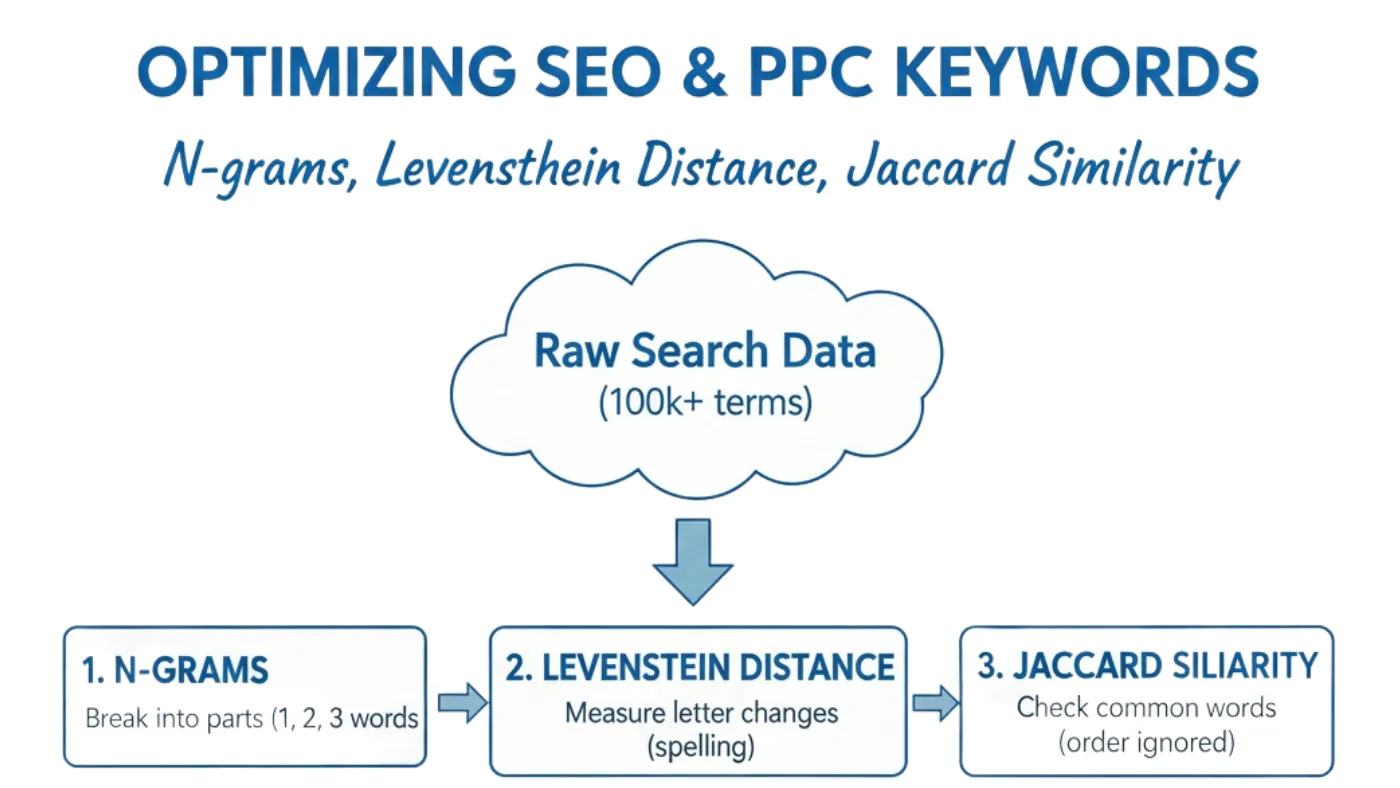
The following are three easy ways of making sense of search data by marketers:
This is the division of a keyword into a sequence of words.
Keyword: “private caregiver nearby”
Why use N-grams?
N-grams are used to transform the sloppy search data into small and useful groups, thus that you can refine your campaigns or content.
Levenshtein Distance is used to indicate the number of letters required to be modified in order to convert a single word into another.
Use in SEO and PPC:
The following is an example of grouping keywords using the Levenshtein Distance:
| Keyword | 24/7 plumber | 24 7 plumber | 247 plumber |
|---|---|---|---|
| 24/7 plumber | 0 | 1 | 1 |
| 24 7 plumber | 1 | 0 | 1 |
| 247 plumber | 1 | 1 | 0 |
The meaning of all three keywords is the same. You can monitor them under a single ad group. Reporting, bidding and control of campaigns become so easy.
Jaccard similarity compares two phrases on the number of similar words. It does not really matter how the words are ordered.
Use: Combine similar keywords that are just reordered. Note: It won’t understand meaning (NYC vs New York), but it works well for duplicates.
You can use these three techniques together for bigger campaigns:
Example: Cybersecurity keywords:
After combining, you can make four main keyword groups:
This keeps campaigns simple, structured, and easier to manage.
| Scenario | Best Technique | Why |
|---|---|---|
| Find high-intent patterns in big search data | N-grams | Shows themes fast and reduces data size |
| Remove duplicate or similar keywords | Levenshtein Distance | Detects spelling and small differences |
| Combine reordered or slightly changed phrases | Jaccard Similarity | Checks similarity ignoring word order |
| Build scalable keyword clusters | Combine all three | Accurate and compact campaign structure |
Conclusion: N-grams, Levenshtein Distance and Jaccard Similarity are required to develop structured, high-performing campaigns in AI in real time, creating keywords. These methods purify your data, eliminate duplicates and enhance your campaigns to be profitable.




No comments yet. Be the first to post!