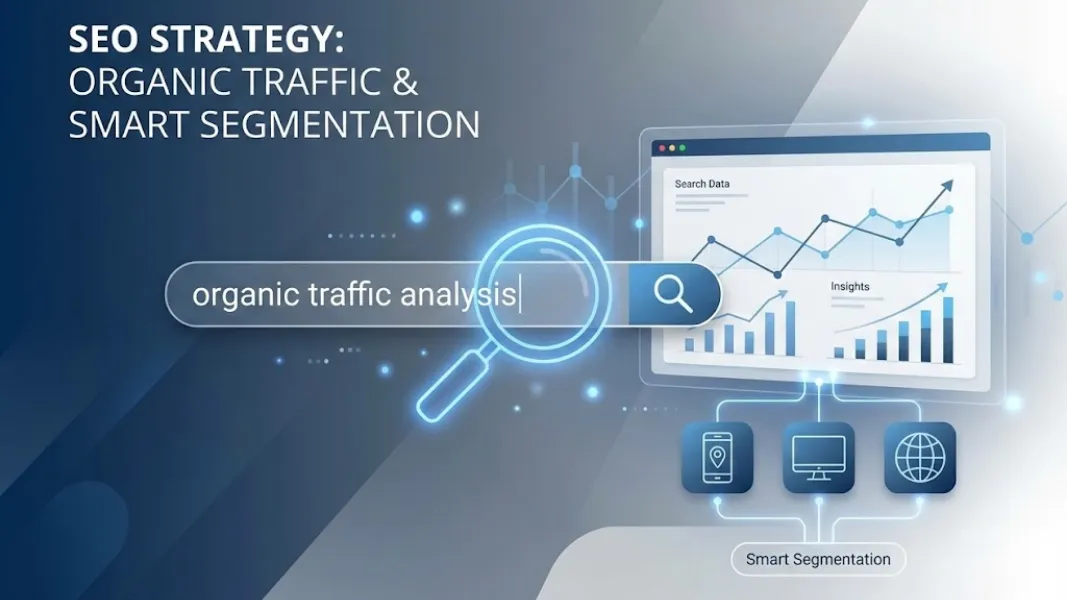
The reason Organic Traffic Could Be Down and the Significance of Smart Segmentation:
Organic traffic is among the most crucial performance indicators to the SEO teams, however, a decrease does not necessarily indicate an SEO issue. The thing you actually require is the segmented data that demonstrates the performance slipping and its causes.
This is what to do to investigate that traffic like a detective:
Step 1: Make sure that there is an actual SEO problem.
Make sure you are not dealing with the problem of something other than SEO metrics:
Tracking Problems
When the declines are reported by all channels (and not only organic) and the metrics of the first-party analytics do not correspond to Google Search Console, you may be misconfigured or missing data in your tracking system.
Brand vs. Non-Brand Traffic
- Brand traffic: Traffic driven by user queries that include the brand name.
- Non-brand traffic: Traffic driven by brand-agnostic user queries.
It is necessary to segment brand queries (e.g people search your name) and non-brand queries (generic searchings). Marketing, PR, and awareness campaigns will affect the brand traffic, but non-brand traffic will show your performance in terms of SEO. Contemporary tools such as Google Search console now have special filters to this segmentation.
Seasonality or Industry Demand.
Traffic drops may merely be seasonal - e.g. a jewelry site during the post holidays season - or more broad changes in interest in an industry and this can be tracked using tools as Google Trends.
Cannibalization through Paid Search.
When you begin placing ads on the same keywords that you are already ranking high, a part of the organic clicks will automatically move to the paid version of the clicks. That is not to say your SEO is not working, it just means that traffic is likely to be reallocated.
Step 2: Segmentation to Identify the Problem.
After establishing an actual SEO problem, segment in multiple ways in order to establish the location of the problem.
1. URL / Landing Page Level
URL filtering can be used to see the pages that are starting to fall and determine whether the issue is localized or global. On conversion-making pages, you should not only check the number of visits, but also conversion impact.
2. Queries & Intent
Filter by search queries. Check the keywords that had the largest clicks or position decreases. AI or clustering tools can be used to bring together variants of related queries and this allows you to see topic-level declines as opposed to single-keywords.
The user intent (informational vs. transactional vs. navigational) can inform the reason why the content type of information does not align with user expectations as well.
3. Device Type
Breakdown performance by device (organic). In case mobile traffic plummets, yet desktop does not, and the other way around, the cause might be a device-specific UX or technical problem.
4. Search appearance / SERP Features.
Google presents various search features (FAQs, video results, rich snippets). The loss of visibility in a particular type of feature can also decrease clicks despite similar rankings - particularly those of the increasing AI overview placements.
5. Geography
The traffic can be targeted to particular nations or cities. Declines in specific geographies may be due to local issues, indexing or competitive changes.
The importance of Segmentation (Supported by Best Practices)
Gain Meaningful Insight
All you have to do is to look at total traffic and you can see that there was a drop, and segmented data tells you why. Patterns in user intent or in device trends, and content types, can be uncovered by raw totals, which obscure them.
Greater Precision in Audience knowledge.
Segments, such as mobile vs. desktop, brand vs. non-brand searcher, new vs. returning user offer more audience insights, which determine priorities and strategy.
Improved Reporting and Decision Making.
Segmented traffic does not only assist you in correcting the issues but also in reporting them. The stakeholders and leadership are concerned with how business will be affected, not a figure. The conversion actions, page types and user behavior segmentation ties the ROI and the SEO performance.
Coming to Terms with Search Engine Optimization.
Segmentation is a necessity today with new search features such as the branded queries filter and AI Overviews in search results, which means that it will not go away in the future.
SEO Pro Tips by Experts in SEO Analytics.
Integrate GA4 & Search Console Google analytics 4 provides behavior and conversion data, whereas Search engine provides insights about organic search. The combination of the two provides the complete picture.
Filter Brand vs. Non-Brand Segments - The branded query filter or tools in Search Console are used to automatically divide these traffic types, removing manual regex filters.
Track Intent & Authority Over Time- Do not look at rankings alone, but how topics are doing year over year. Informational content may be influenced by AI and SERP features in a dissimilar way.
External Signals (e.g., Trends, Competitor Movement) - Get an overview of market demand through the Google Trends tool and compare with a shift in user interest that does not occur within your site to help contextualize organic performance.
Final Takeaways
With proper segmentation:
- You separate SEO issues from tracking, marketing, or seasonal issues.
- You are aware of what kind of content is not performing and why.
- It is possible to make strategic choices that directly relate the performance of SEO to business objectives.

No comments yet. Be the first to post!