What Is Deep Crawl SEO Analysis?
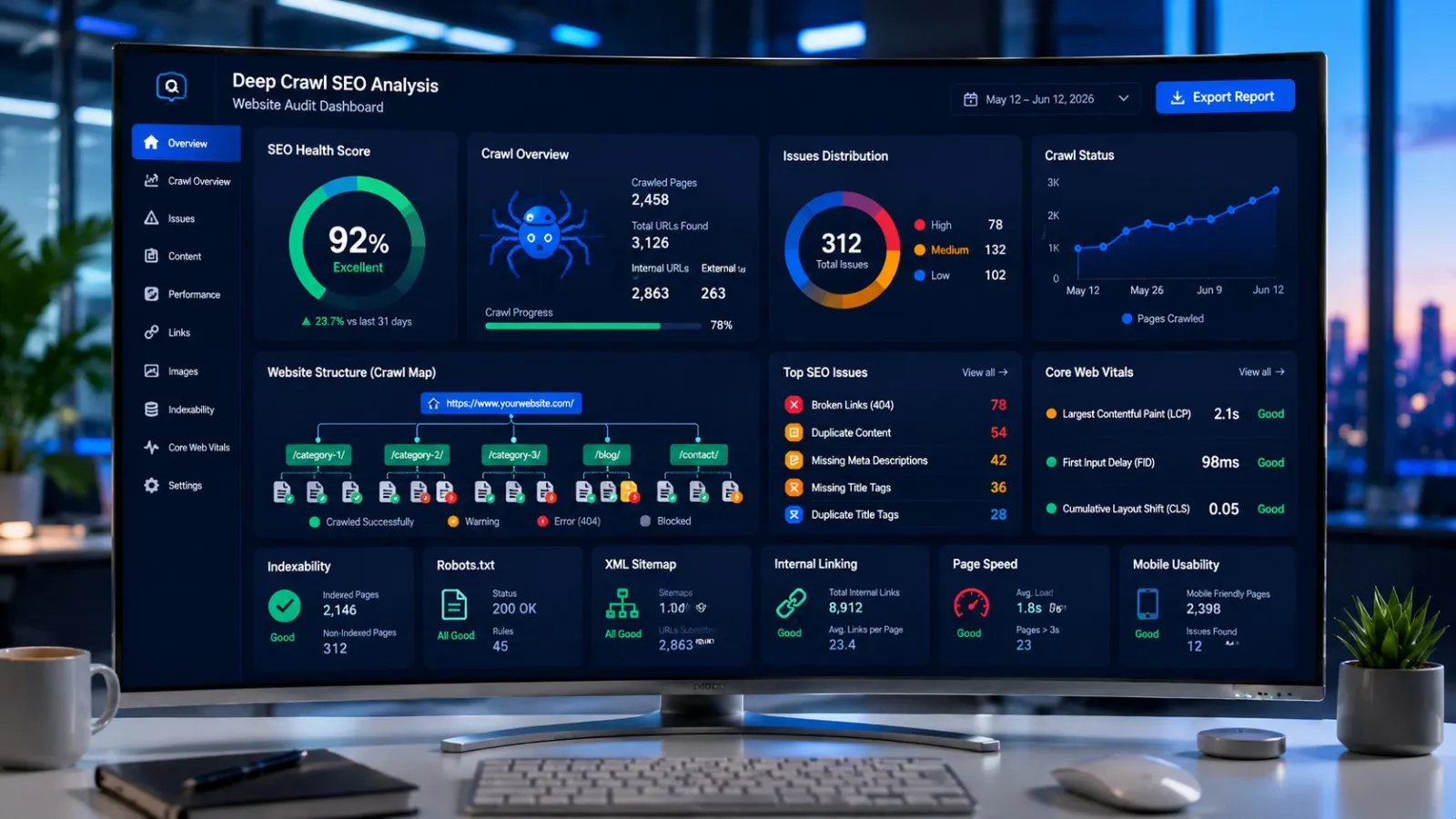
Deep Crawl SEO Analysis is a comprehensive technical SEO audit that scans every crawlable page of your website to identify issues affecting Google crawling, indexing, rankings, and website performance. It helps website owners detect hidden technical problems that reduce organic visibility and prevent search engines from understanding website content effectively.
A professional Deep Crawl SEO Analysis checks your website for:
- Broken links (404 errors)
- Duplicate content
- Crawl and indexing issues
- Missing meta titles and meta descriptions
- Slow page speed
- Core Web Vitals
- Internal linking issues
- XML sitemap errors
- Robots.txt issues
- Canonical tag problems
- Image SEO issues
- Mobile usability errors
Regular website audits improve technical SEO, strengthen website health, enhance user experience (UX), and increase your chances of ranking higher on Google.
Analyse your website using the Webcomforts Site Audit Tool.
Why Deep Crawl SEO Analysis Is Important
A technically optimised website performs better in search engines and delivers a better experience for visitors. Even high-quality content may struggle to rank if search engines cannot crawl, index, or understand your website correctly.
A Deep Crawl SEO Analysis helps you:
- Improve website crawlability
- Increase Google search rankings
- Identify technical SEO errors
- Improve website speed and Core Web Vitals
- Fix indexing and crawl issues
- Strengthen internal linking
- Enhance mobile usability
- Increase organic traffic
- Improve website security
- Maintain long-term website health
Performing regular technical SEO audits ensures your website remains fully optimised after updates, redesigns, or content changes.
Common SEO Issues Found During a Deep Crawl
A Deep Crawl SEO Analysis identifies technical issues that negatively impact search visibility, website performance, and user experience.
Common SEO problems include:
- Broken links and 404 errors
- Redirect chains and redirect loops
- Duplicate content
- Missing title tags
- Missing meta descriptions
- Missing H1 headings
- Incorrect canonical tags
- Orphan pages
- Crawl errors
- Indexing issues
- XML sitemap errors
- Robots.txt configuration problems
- Slow-loading pages
- Large, unoptimised images
- Core Web Vitals failures
- Mobile responsiveness issues
- Structured data (Schema Markup) errors
Resolving these issues improves website crawlability, indexability, page experience, and organic search performance, helping your website rank more effectively in Google Search.
How to Perform a Deep Crawl SEO Analysis
A successful Deep Crawl SEO Analysis follows a structured technical SEO process to identify, prioritise, and resolve website issues.
Follow these best practices:
- Scan your entire website using a technical SEO audit tool.
- Review the crawl report and website health score.
- Identify high-priority technical SEO issues.
- Fix broken links and redirect errors.
- Optimise meta titles, meta descriptions, and heading structure.
- Improve Core Web Vitals and page speed.
- Resolve crawl, indexing, and canonical issues.
- Update XML sitemap and robots.txt.
- Improve internal linking and image SEO.
- Re-crawl your website to verify all fixes.
The Webcomforts Site Audit Tool provides a detailed website health report with actionable recommendations to help improve technical SEO and search performance.
Best Tools for Deep Crawl SEO Analysis
Using a reliable SEO audit tool helps you monitor website health, identify technical SEO issues, and improve search engine performance.
Popular Deep Crawl SEO tools include:
- Webcomforts Site Audit Tool
- Screaming Frog SEO Spider
- Ahrefs Site Audit
- Semrush Site Audit
- Google Search Console
- Google PageSpeed Insights
- Sitebulb
- Bing Webmaster Tools
Among these, the Webcomforts Site Audit Tool offers an easy and effective way to perform a complete website SEO audit, detect technical issues, monitor website health, and improve Google rankings.
Deep Crawl SEO Best Practices & Final Checklist
Following technical SEO best practices ensures your website remains fast, secure, crawlable, and fully optimised for search engines.
Technical SEO Checklist
- Fix broken links and 404 errors
- Remove duplicate content
- Optimise meta titles and meta descriptions
- Improve heading structure (H1–H6)
- Update XML sitemap
- Review robots.txt configuration
- Resolve crawl and indexing issues
- Fix canonical tag errors
- Improve internal linking
- Compress and optimise images
- Improve Core Web Vitals
- Increase website loading speed
- Validate Schema Markup
- Ensure mobile-friendly design
- Improve website security (HTTPS)
- Monitor website health regularly
Regular Deep Crawl SEO Analysis helps improve technical SEO, website performance, Google rankings, organic traffic, and overall user experience. For businesses that want long-term SEO success, routine website audits are essential.
Learn more about professional SEO and web development services at Webcomforts.
Run a complete Website SEO Audit using the Webcomforts Site Audit Tool.




No comments yet. Be the first to post!